Where Design Thinking Stops and Automation Starts
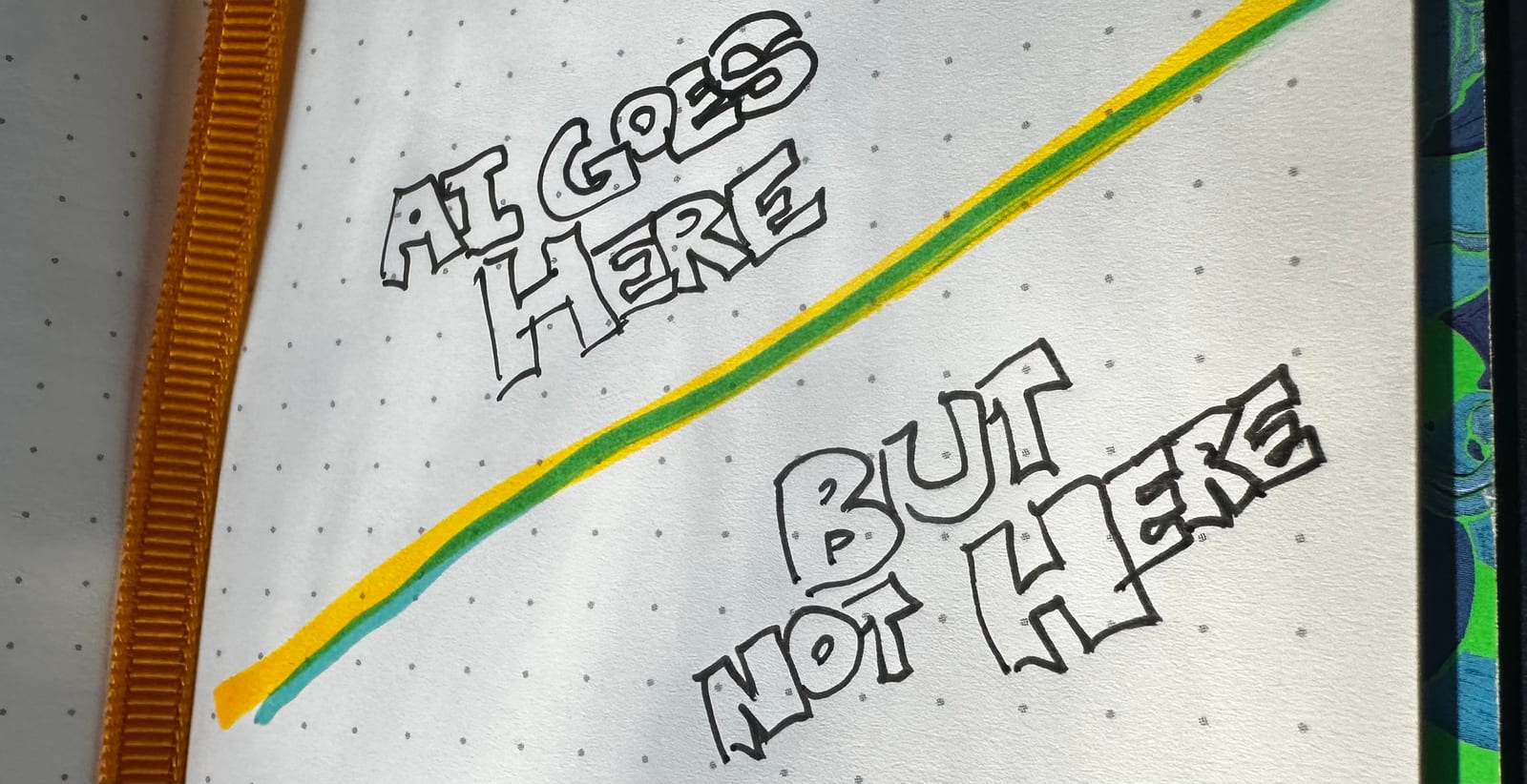
The line is the design.
articleOctober 11, 2026Scott Fegette
The line is the design.
Every workflow I build has a clear line in it. On one side, the agent makes decisions. On the other, I do. That line, and not the automation around it, is the actual design work, and it's the part most "automate your business" advice skips entirely.
The advice you'll usually hear treats automation as a binary decision: either you're doing the task by hand, or you've handed the whole thing over. That framing is unhelpful, and it's why so many automation attempts either don’t do anything useful, or do something you regret. The real question was never "should I automate this process?” It's "which part of this process should I automate, and where does it have to stop?” Automate everything wholesale and you've handed off decisions you weren't ready to delegate. Automate nothing and you're doing manual work a tool could easily absorb. The line in between the two is where actual value lies.
For my own processes, I define that line with three questions, asked in order:
Is this decision reversible if it's wrong? A first-pass timeline is; a sent invoice isn't.
Does it require judgment that depends on context the workflow doesn't have, the specific relationship with this client, a read on their mood this week, or something I know that isn't written down anywhere?
Does getting it wrong put brand or voice at risk in a way that's expensive to publicly fix?
Anything that passes all three questions, with a low reversibility risk, no missing context, and no public voice exposure, is a strong automation candidate. Anything that fails even one of those questions stays on my side of the line, at least for now.
Run those questions against the abstract client-intake workflow I wrote about a couple weeks ago and the answers are:
Organizing a client brief into a template: reversible, no missing context, no public exposure, automate it.
Flagging a budget mismatch: same, automate it (and loudly).
Committing to a delivery date or a price: not reversible in a way a client will forgive? That depends on a client relationship, and getting it wrong would be a public-facing mistake: that call stays with me.
Same workflow, two different lines, because the three questions don't produce a single answer for an entire process, they produce a different answer for each decision inside of it.
This is the actual, practitioner-level answer to "will AI replace creative judgment?" and it's less dramatic than either the optimists or the doomers want it to be. It doesn't replace human judgment. It just moves it away from the repetitive decisions that never took judgment calls to begin with, and toward the smaller number of decisions that really need a person to make the call.
The skill here isn't building the workflow. It's knowing, decision by decision, which side of the line you're standing on.
In your own practice, where does that line sit with your own AI workflows? Genuinely curious where people are actually drawing it, if you’re inclined please drop it in the #creativeai channel on my Discord, and I'll help you think through where the lines should be drawn.
And be sure to drop your email at the Creative AI page for a ping when our book that talks about all this goes live. The line between human and model continues to get fuzzier, and the advice Tom and I put into Creative AI can help you approach your own automation in a way that ensures you’ll always have your hands firmly on the steering wheel.